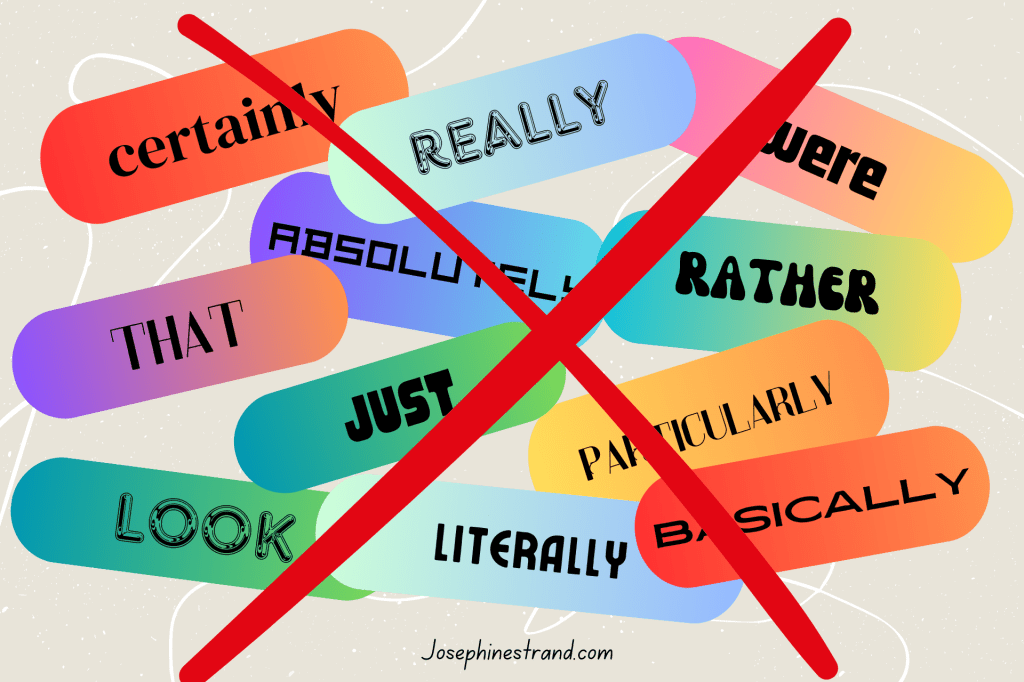
One of the biggest mistakes I made in crafting my first novel was relying too much on “crutch” words—those little words and phrases we slip into our writing without thinking. Sometimes we use them out of habit, sometimes to fill space or emphasize a point. In my early drafts, I constantly used words like just, really, and basically. I didn’t realize they weakened the writing, making it repetitive and less engaging. I’m not an expert, but I’d love to share what I’ve discovered with other writers who might be on the same journey. If you’ve struggled with this too, here are some steps that helped me eliminate crutch words and strengthen my prose.
- Identify Your Crutch Words
Start by familiarizing yourselves with the commonly overused words, then look for them in your drafts. A quick way to spot these is by using your document’s “Find” function to search for words you suspect are overused. When I did this for the first time, I was shocked at how often the word that appeared in my manuscript!
In the first draft of my novel, Misty Dreams—which was initially about 360,000 words—I found:
• 907 instances of just
• 628 of very
• 4,931 of that (yes, really!)
Of course, not every that needs to go, but removing unnecessary ones can tighten your writing. Read the sentence without it—if it still makes sense, cut it.
- Understand Why You Use Them
Once I identified my crutch words, I took a step back to analyze why I was using them. Sometimes, I used them to accentuate a point, but more often than not, they were filler words that added nothing.
Crutch words typically fall into these categories:
- Intensifiers & Fillers: just, really, very, quite, absolutely, actually, literally, totally, basically
- Hedge words: almost, nearly, somewhat, kind of, sort of, maybe, perhaps
- Conjunctions & Prepositions: that, so, then, of, up, down (e.g., “He stood up” > “He stood” or “She sat down” > “She sat”)
I also found that certain words repeated too often in the same paragraph—especially was, were, see, and saw. Recognizing these patterns helped me become more intentional with my word choices.
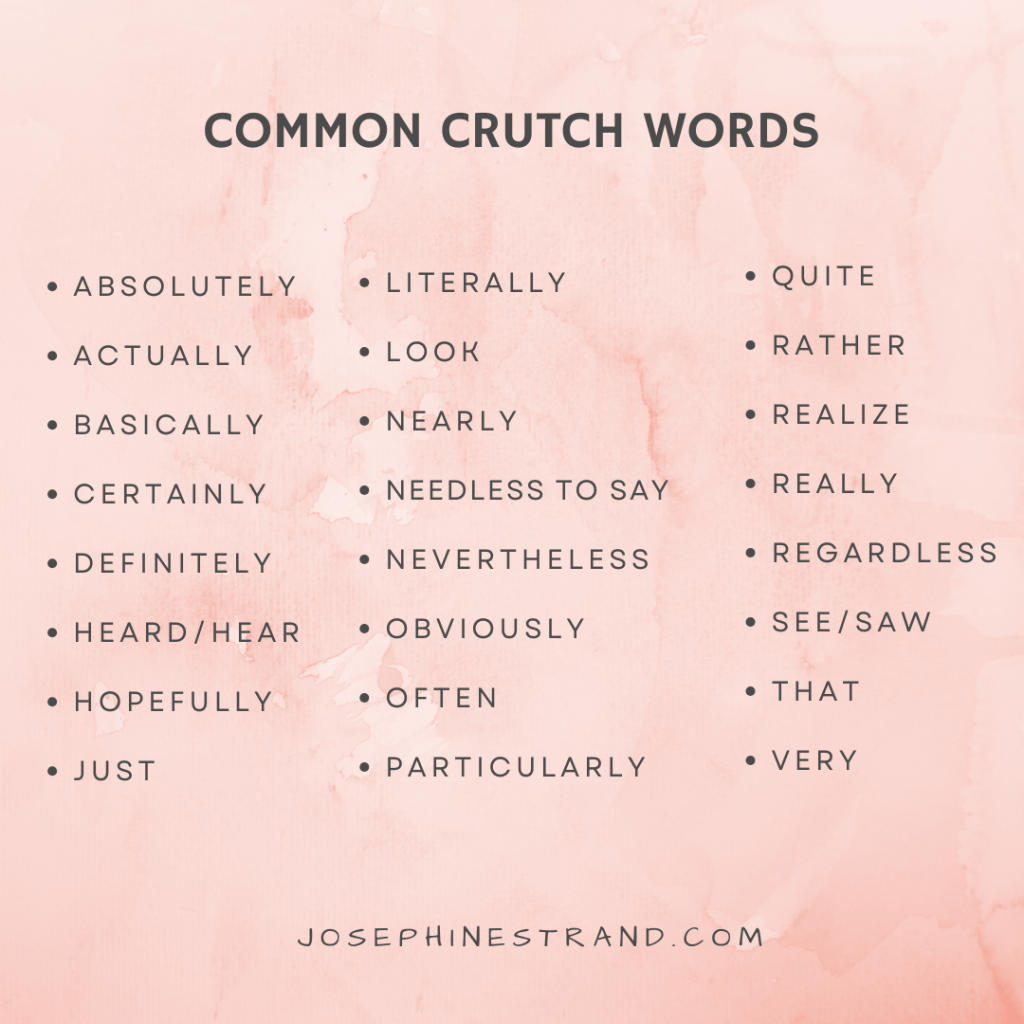
Here are a few commonly used crutch words:
- Replace or Remove Them
Once I spotted my crutch words, I worked on either replacing them with stronger verbs or more precise adjectives, or cutting them entirely.
For example:
- She was very tired.
- She was exhausted.
- It’s really cold outside.
- It is freezing outside
4. Read Your Writing Aloud
One of the most effective tricks I discovered was using the ‘read aloud’ function in my word processor. When I listened to my words, I noticed where my writing sounded clunky, repetitive or wordy. If a sentence felt awkward, I knew it needed tweaking. This method not only helped me catch crutch words but also other sneaky grammar mistakes and flow issues.
Final Thoughts
Eliminating crutch words is an ongoing process—even now, I still catch myself using them! But with practice, I’ve learned to write with more clarity and confidence. If you’re struggling with this, don’t worry—you’re not alone. The key is to stay mindful and keep refining your craft.
What are your biggest crutch words? Have you noticed any patterns in your own writing? Let’s chat in the comments—I’d love to hear your experience!
A huge thank you to my editor (magnificomanuscripts.com), who first made me aware of crutch words and helped me see how small changes can make a big impact.


 josephinestrand.com
Leave a comment