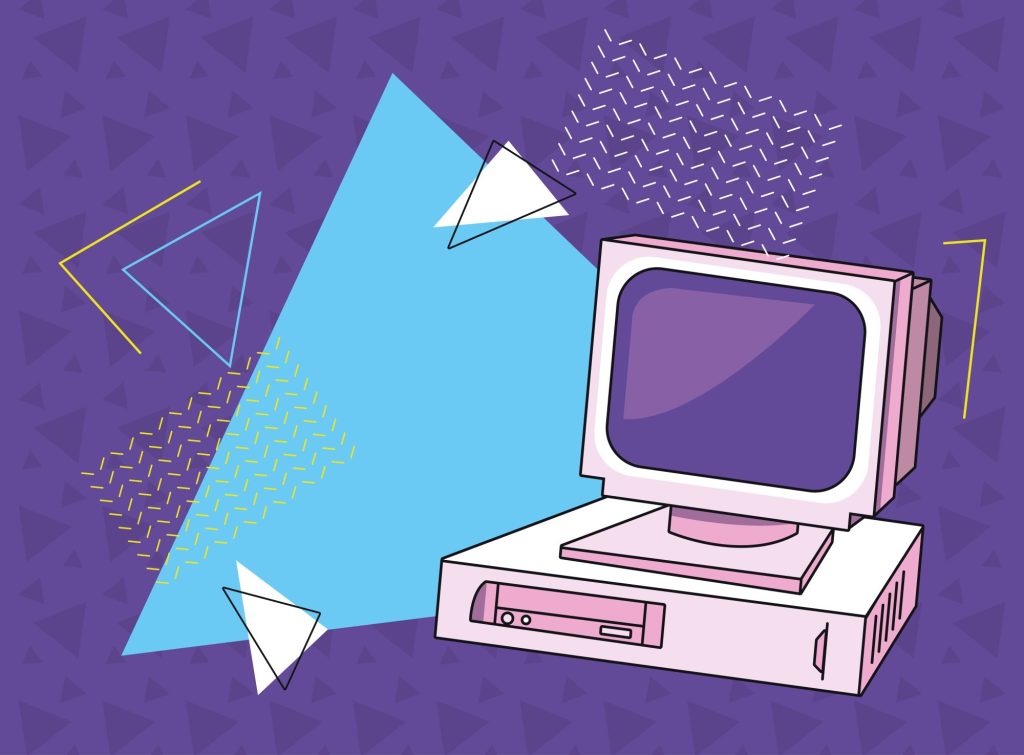
As a child I was fascinated by anything associated with the writing craft, from notebooks and pens, to keyboards. Even before I could identify it as my passion, I was enamored with writing. Back then, the personal computer was the stuff of science fiction. Typewriters were the real deal—bulky, mechanical beasts like the one in my father’s boss’s office. Since he was also a family friend, I’d sometimes sneak into his office when no one was looking and try out the keys. The heavy machine had secrets, I was sure of it. I just didn’t know what they were yet.
When I grew older, my father—wise man that he was—got me a portable Olivetti typewriter. It came with its own sleek carrying case, and quickly became a handy tool for school assignments, résumés, and my first attempts at creative writing. It wasn’t until after I married that I started trying my hand at crafting stories. At night, when my daughter was asleep, I’d sit at my typewriter and click away for hours on end. By then, personal computers were on the horizon, and I dreamed of owning one. Making edits on a manual typewriter was a messy, soul-draining task. My manuscripts looked like war zones of correction tape and smudged ink.
Imagine being able to backspace without that awful white tape. Or skipping the nightmare of carbon paper to make a copy! But in the early eighties, personal computers were still out of reach of the average family.
Enter the word processor—a snazzy upgrade to the electronic typewriter and a more budget-friendly alternative to a PC. I was tempted, but my husband, ever the strategist, said to hold off. “Computers will get cheaper,” he told me. “You’ll be glad you waited.”
He sealed the deal with one of the most meaningful gifts he’s ever given me—a book titled Guide to the Home PC, 1986 Edition—a sort of gentleman’s agreement on the future purchase of a home computer. It became a running joke in our house, but it was his way of saying, “I believe in your dream. We’ll get there.”
Did I understand the book? Not a word. Terms like DOS, RAM, megabytes made my head spin. It felt like I needed an advanced degree just to turn the thing on. After that, the word ‘computer’ wasn’t mentioned in our house for quite a while.
Fast forward to 1990 and our big move to the U.S. My first job in New York City was in a small office, where, despite the new decade, they still relied on electronic typewriters, fax machines and the ancient relic known as the telex (I dare you to Google it!). My welcome to the American workforce came with a crash course in almost-obsolete technology. It was frustrating. It was confusing. It was . . . character building.
But I got through it, and a few months into my new job I had mastered all three. That’s when my husband declared it was time to put my beloved Olivetti in storage and get my own PC. My newfound aptitude with the machines made me a tech guru in his eyes. Taking the leap into the information revolution would be a piece of cake, he said.
My own computer. The idea thrilled me—and scared me half to death. I’d never even touched a real computer before. I’d only seen them in electronic stores or magazines.
We made the pilgrimage to the now-defunct J&R Computer World in Downtown Manhattan, and came home with a brand-new Compaq Desktop PC and a humble little inkjet printer. I was over the moon. I had finally done it—I had the magic writing machine I had dreamed of for years!
That is . . . until I tried to actually use it.
Every keystroke felt like it could blow the system to pieces. I lost sleep worrying I’d delete the entire hard drive with one wrong click. But somehow, I survived—and, I’m glad to report, so did the computer.
Since then, writing has become more enjoyable and rewarding. Technology can be intimidating, but it’s also full of wonder. And it’s taught me something that holds true in every season of life: if your passion is strong enough, you’ll find your way past any obstacle. No dream comes true without any stumbles. And no growth happens without a little fear.
As Ernest Hemingway famously said: “There is nothing to writing. All you do is sit down at a typewriter and bleed.”
(Image by Jema Bry – Freepik)
 josephinestrand.com
Leave a comment